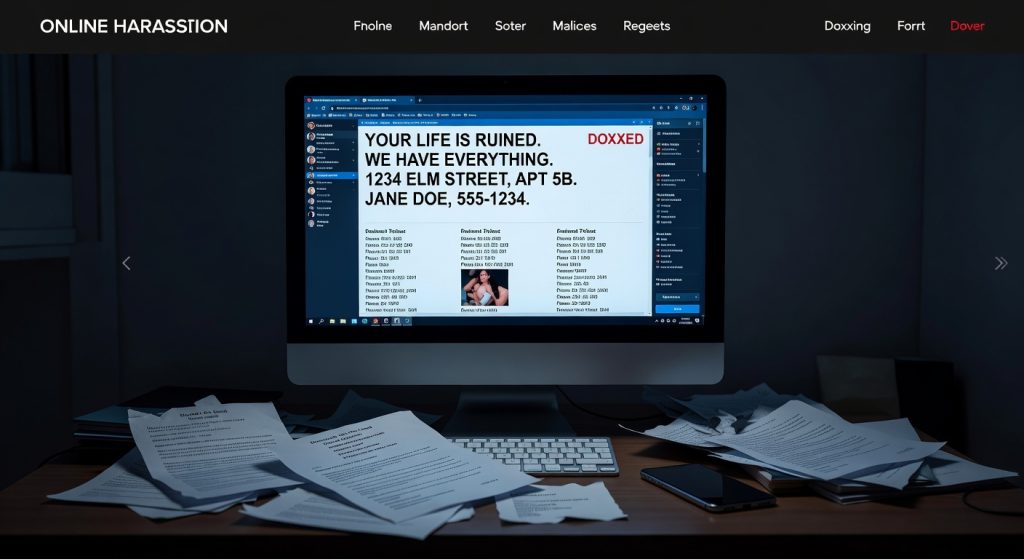
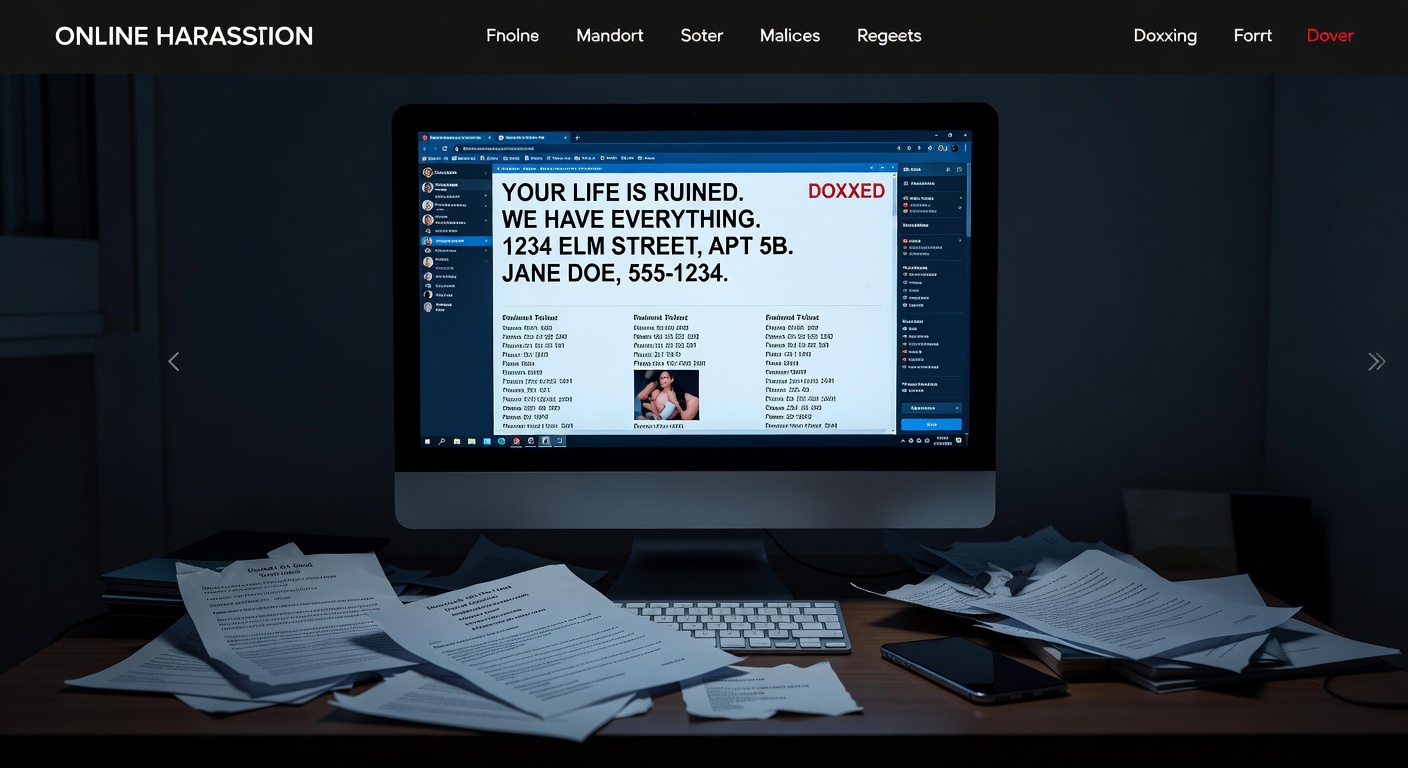
Überblick über Online-Belästigung und Doxxing von Escorts

Online harassment and doxxing pose severe threats, particularly for those working in the escort industry. These harmful practices involve aggressive or intrusive behaviour transmitted through digital platforms—social media, emails, or messaging services. For escorts, who frequently operate in a socially ambiguous space, such threats don’t just violate their privacy; they also create significant psychological strain and safety risks, exacerbating an already precarious situation.
Doxxing represents one of the most intrusive forms of online harassment. It involves the unauthorised disclosure of personal and sensitive details, often with malicious intent to damage a person’s reputation or cause harm. For escorts, this can mean exposing critical information such as residential addresses, contact numbers, or even their full name, escalating risks of cyberbullying and real-world harassment.
Online-Belästigung und Doxxing holds significant importance within escorting circles, yet its role is frequently overlooked amidst deep-seated societal biases. Professionals in this field face heightened vulnerability to online harassment and exclusion, as digital spaces—whether mainstream social platforms or niche communities—often blur the lines between professional and personal spheres. While these platforms can foster connection, they also serve as breeding grounds for hostile cyberbullying, exacerbating the challenges of maintaining privacy and professional integrity.
Online harassment of escorts has seen a marked rise in recent years, largely fuelled by the surging use of digital platforms and the anonymity they afford online. Numerous escorts have detailed persistent harassment, threats, and coordinated efforts to expose their identities publicly—strategies designed to intimidate or force them out of the industry. Such online bullying often triggers severe psychological effects, ranging from acute anxiety to full-blown depression.
Raising awareness about online harassment and doxxing within the escort industry is critical to fostering robust safeguards and offering support to those affected. Without targeted education and digital vigilance, the escalating threat will remain unchecked. Only by prioritising proactive awareness can we effectively counter these risks.
Definition und Formen der Online-Belästigung
Online harassment encompasses a range of unwanted and harmful digital behaviour, particularly impacting sex workers. This includes actions designed to intimidate, humiliate or threaten individuals. Common forms of harassment online include insults, threats, and spam. Cyberbullying stands out as a particularly aggressive variant, where victims endure relentless, deliberate attacks aimed at tormenting them.
Belästigungen im Netz können sich in Form von herabwürdigenden Äußerungen, beleidigenden Mitteilungen oder verletzenden Inhalten äußern, die für Escorts erhebliche psychische Belastungen bedeuten. Bedrohungen werden teils offen, teils verschlüsselt vorgebracht, wobei die Urheber oft gezielt auf Angstmache setzen oder die berufliche sowie persönliche Unversehrtheit der Betroffenen gefährden wollen. Unerwünschte Massenkommunikation – etwa in Form von Spam – belastet durch überflüssige Werbung, schädliche Links oder irrelevante Nachrichten und nimmt den Betroffenen das Gefühl von Kontrolle über ihre digitale Präsenz.
Online harassment manifests in diverse forms that frequently intertwine, amplifying their collective impact. Beyond causing emotional distress, it can disrupt schwerwiegende Auswirkungen auf das berufliche and the personal lives of escorts alike. Raising awareness about these different types of harassment is crucial—it lays the foundation for effective safeguards and better support for those affected.
Was ist Doxxing und warum betrifft es Escorts besonders?
Disclosing private and sensitive details about an individual online without their consent is known as doxxing. This practice poses a significant risk for escorts, whose personal data can be exploited by unauthorised parties to cause harm, particularly when their privacy is already vulnerable.
Malicious actors can expose highly sensitive details such as full names, residential addresses, contact numbers, personal photographs, or insights into professional environments through a process known as doxxing. These data points are often compiled from public social media accounts, online profiles, or breached databases before being shared across forums, social platforms, or dedicated websites.
Escorts may face weitreichende Risiken bedeuten risks that extend far beyond simple exposure—threats to their anonymity and personal safety could escalate into harassment, stalking, or even physical harm. The intrusion into their privacy frequently compounds these dangers, leaving lasting psychological strain and disrupting their social lives.
Doxxing undermines far more than just the peace of mind for those affected—it also creates significant disruptions in the day-to-day work of many escorts, making their professional lives far more challenging. Safeguarding privacy and implementing proactive safeguards are therefore essential to curb the risks posed by doxxing.
Auswirkungen von Online-Belästigung und Doxxing auf Escorts

Online harassment and doxxing pose a severe risk for escorts, transcending mere digital threats to impact their lives in profound ways. The fallout often includes physical danger, deep emotional distress, and career-ruining repercussions, leaving victims vulnerable and their well-being severely compromised. Specialist support offers tailored support to help navigate these challenges and safeguard affected individuals.
Escorts face heightened security threats due to doxxing and the ensuing intimidation tactics that often follow. When personal details—such as home addresses or daily movements—are exposed, the consequences can range from persistent stalking and unwelcome visits to outright aggression. The constant fear of being tracked erodes confidence and can push individuals into withdrawing from social interactions, deepening isolation.
The psychological impact of online harassment is multifaceted and often enduring. Numerous sex workers describe heightened stress, anxiety, and depressive episodes stemming from persistent vulnerability and the sense of constant scrutiny. Insomnia, elevated stress levels, and a severely diminished sense of self-worth are common consequences. Such mental strain permeates personal life but also undermines professional competence and productivity.
For professionals in the industry, the repercussions of online harassment can be deeply damaging. When doxxing exposes their identity, it strips away the anonymity that many escorts rely on for their safety and professional integrity. This breach doesn’t just unsettle existing clients but also heightens the likelihood of adverse responses from employers or authorities. Furthermore, the fear of sustained attacks may significantly deter individuals from continuing their work in the field.
Auswirkungen von Online-Belästigung and doxxing within the escort industry pose serious, far-reaching risks that extend beyond mere physical danger. They inflict severe psychological strain and jeopardise professional stability, often leaving victims with lasting harm. To mitigate these consequences, robust safeguards and targeted support systems must be introduced—ensuring victims receive the assistance needed to recover and rebuild.
Psychologische und emotionale Folgen
enorme psychische Belastung poses a persistent threat to escorts, with victims often grappling under relentless pressure. The constant dread of private details being exposed or harassment spiralling out of control creates deep-seated anxiety, eroding mental wellbeing over time. Doxxing and relentless online harassment leave a lasting toll on those affected, making even routine interactions feel fraught with unseen risks.
Doxxing führt häufig zu nachhaltigen psychischen Belastungen, die sich in Form von Angstzuständen manifestieren, während Selbstvertrauen und ein Sicherheitsgefühl nachlassen. Die anhaltende Sorge um zukünftige Angriffe sowie die fehlende Kontrolle über persönliche Daten können zu einer anhaltenden Überlastung führen, die den Alltag spürbar beeinträchtigt.
Die mentale Belastung für Escorts verschärft sich in dieser Phase deutlich, weil ihnen häufiger die Möglichkeit entgeht, einen geschützten Rückzugsort zu finden – ein Umstand, der das Gefühl der Einsamkeit verstärkt. Die ständige Notwendigkeit, sowohl im Privat- als auch im Berufsleben auf erhöhte Vorsicht zu achten, belastet nachhaltig und kann auf Dauer zu anhaltender Erschöpfung sowie depressiven Tendenzen führen.
The repercussions of online harassment and doxxing extend far beyond the immediate incident, profoundly impacting the emotional resilience and the psychological well-being of those affected. Addressing these challenges with appropriate resources and interventions is therefore critical to mitigating their lasting effects.
Berufliche und soziale Konsequenzen
Doxxing kann für Escorts weitreichende berufliche und persönliche Konsequenzen mit sich bringen, selbst wenn ihre Tätigkeit rechtlich abgesichert ist. Die unkontrollierte Offenlegung sensibler Daten kann dazu führen, dass sie ihren Job verlieren – oft aus Vorurteilen oder gesellschaftlichem Druck, der selbst seriöse Arbeitgeber verunsichert. Die finanzielle Stabilität der Betroffenen gerät dadurch schnell in Gefahr, während ihr soziales Umfeld zusätzlich belastet wird.
Exposure can exacerbate social isolation beyond mere job loss, as exposed details often prompt friends, family, and wider networks to adopt a guarded or dismissive stance. The resulting exclusion doesn’t just strain emotional resilience—it can severely hamper one’s ability to thrive within their community.
Stigma further compounds the reputational damage suffered by affected escorts, as a tarnished name—whether in public or industry circles—persists far beyond the immediate incident, casting a long shadow over future opportunities. The fear of being branded or unfairly judged can force individuals to withdraw from work or abandon career aspirations entirely, leaving them with lasting professional and personal consequences.
Die Offenlegung der Identität kann verheerende Folgen für Beruf und soziales Umfeld haben, die weit über bloße persönliche Belastungen hinausgehen. Betroffene riskieren nicht nur den Verlust ihres Arbeitsplatzes, sondern erleben häufig auch einen tiefgreifenden Ausschluss aus ihrem Netzwerk – ein Prozess, der sich oft als unumkehrbar erweist. Noch schwerwiegender ist der anhaltende Schaden für den Ruf, der langfristig Karrierewege blockiert und Vertrauen in jede zukünftige Interaktion zerstört. Diese realen Konsequenzen unterstreichen die dringende Forderung nach Unterstützung für Betroffene sowie nach einer Aufklärung über die Risiken von Doxxing, um präventive Maßnahmen zu fördern.
Strategien zum Schutz vor Online-Belästigung und Doxxing
Escorts face significant risks from online harassment and doxxing, necessitating proactive safeguards. Implementing robust cybersecurity practices and privacy protocols is essential to mitigate these threats. Below, we outline actionable steps designed to help maintain anonymity and deter malicious exposure while operating in the digital space.
To enhance privacy and security, it’s crucial to adopt pseudonyms and avoid sharing any personal details online. Professionals in this field must never disclose their real names, home addresses, or phone numbers on profiles or during interactions. Opting for secure aliases that don’t reveal true identities is far safer. This approach significantly lowers the risk of doxxing—unauthorised exposure of personal information.
To enhance your online security, it’s essential to employ robust and distinct credentials across all online accounts. Utilising a dedicated password manager simplifies the creation and storage of highly secure, randomly generated passphrases. Enabling two-factor authentication further strengthens account protection by requiring an additional verification step. Keeping devices and software up to date with the latest security updates also helps mitigate vulnerabilities and reduces exposure to potential threats.
Another key safeguard lies in the meticulous curation and oversight of communication channels. Opting for encrypted messaging platforms such as Signal or Threema significantly bolsters security. Public Wi-Fi should be avoided entirely or, if unavoidable, accessed exclusively via a VPN to guarantee encrypted data transmission.
Good digital hygiene ensures your digital footprint remains secure by routinely reviewing and refining privacy controls across social platforms and networks. All too often, users fail to grasp the extent of their exposed personal data—details that could inadvertently fall into the wrong hands. By tightening access to a strictly curated audience, you minimise the risk of unwanted scrutiny or third-party investigations.
Digitale Selbstverteidigung ist ein essenzieller Bestandteil der eigenen Sicherheit, weshalb professionelle Begleiter:innen stets die Bedeutung von proaktiven Maßnahmen erkennen müssen – dazu gehört auch, sich aktiv von lästigen oder belästigenden Kontakten fernzuhalten. Bei Vorfällen von unangemessenem Verhalten ist es entscheidend, dies unverzüglich und ohne Ausnahmen an die zuständige Plattform zu melden. Gleichzeitig können Betroffene durch den Austausch mit spezialisierten Anlaufstellen sowie dem Netzwerken mit Gleichgesinnten nicht nur konkrete Schutzmaßnahmen erarbeiten, sondern auch wertvolle emotionale Rückendeckung erfahren.
To significantly reduce the threats posed by cyber harassment and doxxing, adopting robust protective measures is essential. Cultivating a strong sense of digital security and prioritising personal data safeguards forms the cornerstone of proactive defence. By staying vigilant and informed, individuals can effectively lower their exposure to online risks.
Technische Schutzmaßnahmen und Datenschutz
To safeguard their online presence securely, escorts can leverage a range of technical safeguards and privacy-focused tools. A cornerstone of this approach is the use of a VPN (Virtual Private Network), which encrypts their internet traffic and masks their real IP address. This helps maintain anonymity while significantly reducing exposure to surveillance or tracking online.
Beyond basic security, robust passwords are essential—each platform demands its own unique, intricate credential, blending uppercase and lowercase letters, numbers and symbols for maximum protection. Tools like password managers streamline management while bolstering defences, ensuring complexity without compromising usability.
Equally critical is the use of anonymisation services, which allow you to conceal personal details and identifying features when online. By obscuring metadata and avoiding direct links to personal profiles, privacy is significantly enhanced. A strategic blend of these technical safeguards offers robust protection for escorts against online harassment and doxxing, ensuring greater security and peace of mind.
Eine Kombination aus VPN-Nutzung, robusten Passwörtern und durchdachten Datenschutzeinstellungen schafft eine zuverlässige Absicherung, um im anspruchsvollen Umfeld der Escort-Branche die persönliche Sicherheit und den Schutz vor Datenmissbrauch zu maximieren.
Rechtliche Schritte und Unterstützungsmöglichkeiten
For escorts facing online harassment or doxxing, a range of legal protections is available to safeguard their privacy and well-being. Seeking early advice from a qualified legal professional is essential to identify the specific remedies applicable to each unique situation. These protective measures may include initiating criminal proceedings against perpetrators, particularly in cases where personal rights have been infringed or actions meeting the threshold for criminal liability have occurred.
Charities complement this support with dedicated advice centres and victim advocacy groups, which provide tailored assistance to those affected by ensuring they receive both guidance and practical aid. These reporting hubs accept formal complaints and grievances, facilitating the transfer of cases to the relevant authorities. Additionally, many of these initiatives deliver emotional and psychological support, recognising the profound distress that online harassment can inflict on individuals.
Escort professionals are advised to familiarise themselves with their legal entitlements and, where necessary, reach out to law firms specialising in cyber law and victim advocacy. Such expert guidance can help initiate the right actions against perpetrators while safeguarding personal security. Collectively, legal safeguards, professional advice, victim support and reporting channels form a critical framework for combating online harassment and doxxing effectively.

I have always been fascinated by the psychology of companionship and the sociological nuances of the adult industry. My goal is to provide thoughtful, clear-eyed perspectives on the dynamics of connection and service that define this world. I approach every topic with a genuine curiosity about the human stories involved.